
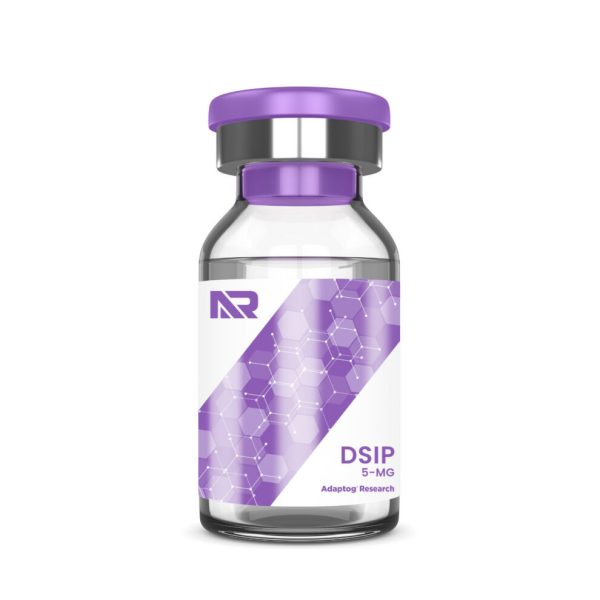

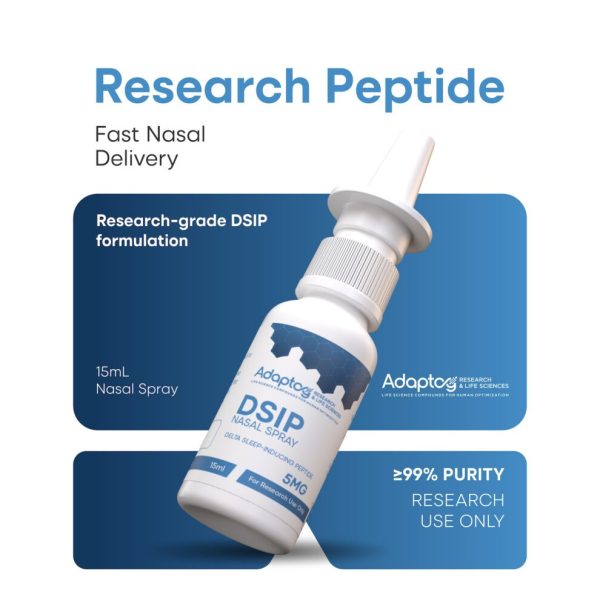



DSIP (Delta Sleep-Inducing Peptide) For Sale
- Modulates sleep–wake cycles
- Regulates stress response mechanisms
- Influences neuroendocrine function
- Supports circadian rhythm research
What is DSIP?
DSIP (Delta Sleep–Inducing Peptide) is a naturally occurring neuropeptide that was first isolated from the cerebral venous blood of rabbits in 1977. It is a nine–amino–acid peptide that has been extensively studied for its ability to promote sleep regulation, manage stress response and neuroendocrine modulation, which is the process of the nervous system and endocrine system communicating to regulate bodily functions, maintaining homeostasis.
How Does DSIP Work?
DSIP uses several pathways in the central nervous system to have its effects:
- GABAergic system modulation: DSIP affects GABA receptors in the brain and alters GABAergic signalling. It has a key role in shaping sleep patterns and controlling neuron activity.
- Opioid receptor interaction: Scientists have found that DSIP changes how opioid receptors work. This change helps explain its role in how the body handles stress and feels pain during experiments.
- Hypothalamic–pituitary–adrenal (HPA) axis regulation: DSIP has an influence on the HPA axis. It changes how cortisol is released and helps to manage stress hormones. Research conducted on animal subjects also showed that it can help fix hormone imbalances caused by stress.
- Calcium channel modulation: DSIP changes calcium ion movement in nerve cells. This is an important process for releasing neurotransmitters and sending signals between cells.
- Circadian rhythm role: DSIP positively influences circadian clock genes and proteins, suggesting it may help regulate biological rhythms in ways beyond just improving sleep schedule and sleep quality.
Potential Benefits of DSIP
DSIP has demonstrated multiple effects in preclinical research:
- Sleep architecture: When administered in animal studies, scientists observed an increased delta wave sleep duration, as well as improved sleep stage transitions. Additionally, trials involving rates showed significant changes in sleep–wake patterns under DSIP.
- Stress response modulation: DSIP reduced stress–induced behavioural changes and normalised cortisol levels in stressed animal models. It demonstrated protective effects against chronic stress–induced physiological changes.
- Neuroprotective properties: In vitro research demonstrated reduced cell death in neurons that are exposed to stress conditions under the administration of DSIP. Studies also indicated that DSIP may protect neuronal cells from excitotoxicity and oxidative stress.
- Neuroendocrine regulation: DSIP shows the ability to influence growth hormone secretion patterns and thyroid function.
- Withdrawal symptom reduction: In animal models of substance dependence, DSIP administration reduced withdrawal symptoms and normalised sleep patterns disrupted by substance use.
Safety for the Use of DSIP
DSIP has been researched in numerous preclinical studies. However, it remains unapproved for human use. This is largely because:
- Limited long–term data: Most studies only examined short–term administration. The long–term effects on neurological function and endocrine systems require further investigation before approval.
- Individual variability: Animal studies have shown variable responses to DSIP administration, which suggests that genetic or physiological factors may influence the peptide’s effectiveness.
- Hormonal effects: Due to its influence on the HPA axis and other endocrine pathways, DSIP may affect multiple hormone systems. Researchers need to monitor endocrine parameters in experimental protocols first.
- Interaction potential: DSIP’s effects on GABAergic and opioid systems suggest potential interactions with compounds that also affect these pathways.
DSIP Data Sheet
- CAS Number: 62568–57–4
- Molecular Weight (g/mol): 848.81
- Chemical Formula: C₃₅H₄₈N₁₀O₁₅
- Sequence: Trp–Ala–Gly–Gly–Asp–Ala–Ser–Gly–Glu
- PubChem CID: 6886
- ChemSpider: 62052
- ChEMBL: CHEMBL2104403
Conclusion
DSIP is an exciting peptide to study how sleep works, how the body handles stress, and how hormones function. DSIP works through several pathways, including GABAergic systems regulating the HPA axis and affecting circadian rhythms. This makes it a key resource to explore complex brain and body systems.
Researchers have shown that it can change sleep patterns, adjust how the body reacts to stress, and impact various hormones in test models. It is especially beneficial to study the detailed links between sleep, stress, and hormones, which, if and when it is approved for human use, makes it an incredible tool for those who struggle with their sleep and stress. DSIP is not approved for human use because researchers still have limited data on its safety and effectiveness. We offer DSIP for research purposes.
| Volume |
2mg, 5mg |
|---|---|
| Product |
Nasal Spray, Vial |

Reviews
There are no reviews yet.